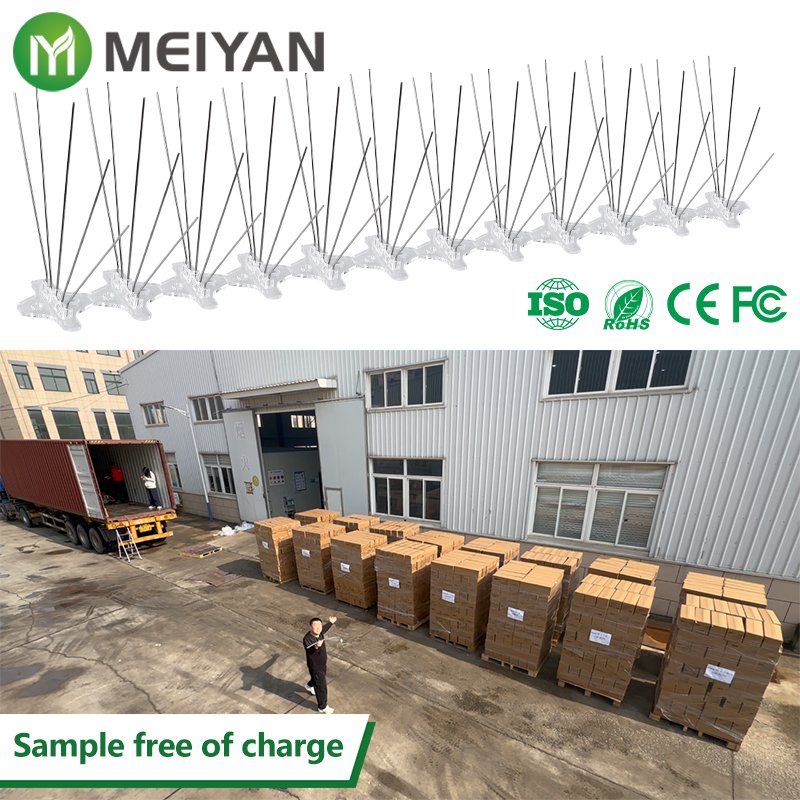
As global urbanization accelerates, the challenge of maintaining architectural integrity against avian-related damage has reached a critical turning point. Today, industry analysts are highlighting the surge in demand for 5-row stainless steel bird spikes as the primary strategy for large-scale property protection, citing their superior density and all-weather resilience as the new professional standard.
Beyond Standard Protection: The High-Density 5-row Advantage
Traditional deterrents often feature 2 or 3 rows of spikes, which can leave gaps for smaller species like sparrows or starlings. The technical breakthrough of the 5-row stainless steel bird spikes lies in their staggered needle configuration.
By utilizing a high-density layout, this design eliminates the “landing strip” effect, ensuring total coverage for wide ledges and complex rooflines. This makes them the leading anti-bird deterrent system for high-stakes commercial facilities and historic government buildings where maintenance failure is not an option.
Engineering Resilience: Polycarbonate Bases and SS304 Longevity
The marriage of high-grade polymers and metal alloys is what defines modern urban pest management. Leading manufacturer MEIYAN has optimized their polycarbonate base bird spikes to survive extreme thermal shifts.
- Material Excellence: Featuring SS304 bird control spikes, these deterrents are immune to the corrosive nature of bird guano and harsh industrial air.
- UV-Stabilized Base: The polycarbonate base is engineered to remain flexible and crack-free in temperatures from -40°C to 120°C, ensuring stability in both the high-UV environments of the Middle East and the freezing winters of Northern Europe.
Manufacturing Authority and Global Compliance
Operating from a specialized 12,000㎡ production hub, Their products carry ISO, CE, and FCC certifications, providing B2B partners with total quality assurance.
“Our goal is to provide a roof protection solution that is both effective and ethical,” says the production lead at MEIYAN. “Physical barriers remain the most sustainable form of bird control, as they require no toxic chemicals and do not harm the avian population—they simply reorganize urban flight patterns.”
Strategic ROI: Why B2B Buyers are Switching to Factory-Direct Models
The cost-benefit analysis for 2026 property management favors long-term physical shields over recurring deterrent treatments. MEIYAN’s factory-direct model, complete with free sample programs, allows international distributors to evaluate the structural integrity of the all-weather infrastructure shield before committing to large-scale procurement.
Conclusion: A Cleaner Future for Urban Architecture
The adoption of 5-row stainless steel bird spikes represents a smarter approach to building management. By combining the strength of stainless steel with the versatility of flexible polycarbonate, property owners can safeguard their assets while adhering to modern ecological standards.
For technical specifications or to request a factory-direct sample free of charge, visit mybirdspikes.com.
Environmental Sustainability and the Future of Humane Bird Control
As modern cities prioritize green building standards, the demand for non-toxic pest management has increased. Implementing 5-row stainless steel bird spikes is recognized as one of the most eco-friendly methods for avian control. Unlike chemical repellents or sticky gels that can harm the environment, these physical barriers provide a clean, sustainable solution. By choosing high-density 5-row stainless steel bird spikes, property owners demonstrate a commitment to both infrastructure preservation and urban biodiversity.
Furthermore, for large-scale commercial projects, the adaptability of the polycarbonate base bird spikes allows for seamless integration across diverse architectural styles. Whether it is a luxury hotel facade or a critical industrial cooling tower, the 5-row stainless steel bird spikes provide a low-profile, high-impact shield. This ensures that the aesthetic value of the property remains intact while eliminating the operational risks associated with avian-related debris and structural corrosion. Investing in these high-density bird deterrents today secures the building’s future for the next decade.